The other day, I was coaching Hana, a healthcare executive, who was feeling overwhelmed by the many aspects of leadership development. “I know I need to grow, but I don’t know where to start,” she admitted.
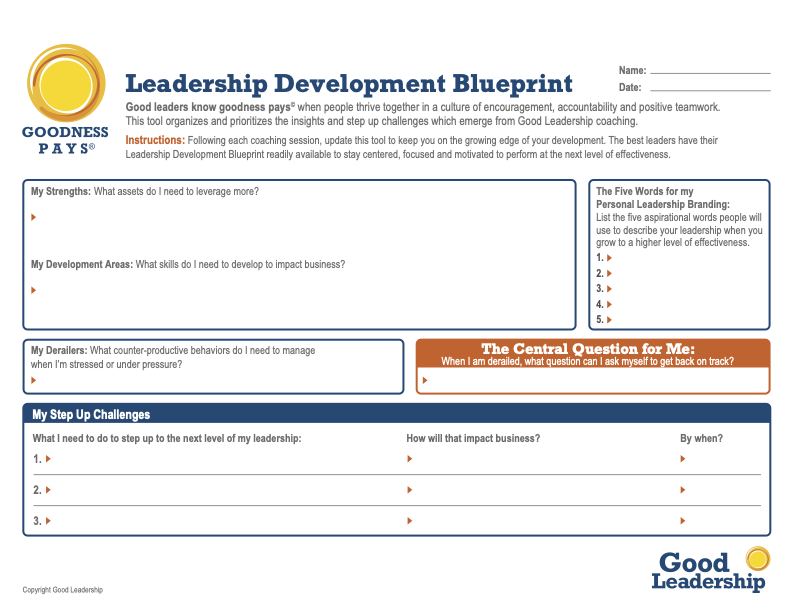
“That’s exactly why we use the Leadership Development Blueprint,” I told her. “It’s a tool to help you organize and prioritize your development—everything in one place.”
The Leadership Development Blueprint was invented by Good Leadership as a way for leaders to focus on the areas that matter most to them in their growth. Those areas are:
- My Strengths
- My Development Areas
- The Five Words for My Personal Leadership Brand
- My Derailers
- The Central Question for Me
- My Step-Up Challenges
Hana found this structure compelling. “I love that it gives me clarity. Instead of a vague idea of development, I can see everything I need to focus on in one place.”
“Exactly,” I said. “It’s not just about reflection—it’s about action. The Blueprint helps you build a plan for yourself, something you can share with others who support your growth.”
Hana left that conversation eager to dive in, knowing she finally had a structured way to guide her development. But the real transformation happened when she put the Blueprint into action.
Part 2: Putting the Blueprint to Work
A few weeks later, Hana and I sat down to review her Leadership Development Blueprint. One area stood out to her: handling high-pressure situations.
“When I’m stressed, I tend to step back and let others take control,” she admitted. “That often means decisions are made without my input, and I end up frustrated with the outcome.”
“That’s an important insight,” I said. “What if we created a central question that helps you stay engaged under pressure? A question that brings you back on track?”
We brainstormed and landed on this:
‘Knowing that everyone has the best interest of the business in mind, what questions can I ask or input can I give that will advance things to the places I need them to go?’
“This feels right,” she said. “It reminds me that I don’t need to fight for control—I just need to ask the right questions.”
We added it to her Blueprint under The Central Question for Me: When I am derailed, what question can I ask myself to get back on track?
Over the next few weeks, Hana practiced using this question in meetings and high-stress situations. She found herself speaking up more, contributing in meaningful ways, and being part of decisions she could fully support.
Eventually, she shared her Leadership Development Blueprint with her direct leader. “I want you to be a part of my growth,” she told him. By making her development visible, she invited accountability and support.
Hana’s transformation was clear. By understanding her strengths, addressing her derailers, and anchoring herself with a powerful question, she took control of her leadership journey. The Blueprint wasn’t just a tool—it became the roadmap to her success.
The main point of this two-part story is:
A structured development plan—like the Leadership Development Blueprint—turns vague growth goals into focused action, helping leaders build clarity, confidence, and real momentum in their leadership journey.
It’s not just about knowing you need to grow—it’s about having a plan that makes growth intentional, visible, and transformational.
From Overwhelmed to Empowered: How a Leadership Blueprint Sparked Real Growth
“I know I need to grow, but I don’t know where to start.”
That’s what Hana, a healthcare executive, told me in our first coaching session. She was stepping into more responsibility—and feeling the pressure.
I introduced her to the Leadership Development Blueprint—a framework that organizes growth in one place. It includes your strengths, development areas, derailers, and even a “central question” to help you course-correct under pressure.
Hana found clarity. We built a development plan that wasn’t just reflection—it was actionable.
One insight stood out:
“When I’m under stress, I step back. And then decisions get made without me.”
We created a grounding question for her:
“Knowing everyone has the best interest of the business in mind, what questions can I ask or input can I give that will advance things to the places I need them to go?”
With that shift, she started speaking up more—contributing meaningfully and becoming a stronger presence under pressure.
Later, she shared her Blueprint with her leader. “I want you to be a part of my growth.” That step deepened trust and accountability.
This is what a good development plan can do.
It gives clarity, confidence, and momentum. It’s not just about growing—it’s about leading on purpose.
Are you building your own blueprint for growth?